Projects


Senior Process Engineer
Additive Manufacturing
Everllence
Dipl.-Ing. Mechanical Engineering
RWTH Aachen University
Simon Vervoort is a Senior Process Engineer for Additive Manufacturing at Everllence, formerly MAN Energy Solutions. His work focuses on the development of applications and process chains for laser powder bed fusion (LPBF) serial production as well as directed energy deposition (DED) repair processes for turbomachinery.
He received his graduate degree in Mechanical Engineering, specializing in Jet Propulsion and Turbomachinery, from RWTH Aachen University. After an internship at Siemens Winergy in Elgin, Illinois, he joined the Fraunhofer Institute for Laser Technology ILT in 2014.
At Fraunhofer ILT, he worked for several years in LPBF process development before becoming Group Manager for LPBF Application Development. In this role, he focused on the industrialization of metal additive manufacturing. In 2025, he joined Everllence, where he now develops additive manufacturing processes for serial production and repair applications in turbomachinery.
Head of Operations
NEOFORGE
Berlin, Germany
Metal Additive Manufacturing
AI-based Process Simulation & Qualification
Dipl.-Ing. Mechanical Engineering
Otto von Guericke University Magdeburg
Peter Böttner has more than 15 years of experience in metal additive manufacturing, with a career spanning engineering, production, sales, and industrial qualification. He began working in additive manufacturing at aprocas GmbH / citim GmbH in Barleben and later joined Oerlikon AM Europe GmbH, where he contributed to building up the company’s quotation management function. Throughout his career, he has worked at the interface between component requirements, manufacturing processes, and industrial production.
He holds a Dipl.-Ing. degree in Mechanical Engineering from Otto von Guericke University Magdeburg. His diploma thesis already focused on the comparison of additive manufacturing with conventional production methods such as CNC machining and sand casting for metallic components.
Today, Peter Böttner is Head of Operations at NEOFORGE in Berlin. There, he oversees the integration of AI-based process simulation and qualification software with metal additive manufacturing for complex, high-temperature components. His work focuses particularly on the predictable and scalable production of components made from nickel-base superalloys such as Inconel, Hastelloy, and Haynes for demanding aerospace, space, and defense applications. At NEOFORGE, physics-based simulation is used to reduce trial-and-error in the qualification of new materials and geometries and to accelerate the development of components for hydrogen- and ammonia-compatible combustion systems.
Head of Tools and Methods
Large Gas Turbine Combustion Module
Siemens Energy
Cluster Lead
Large Gas Turbine Combustion
Technology Development
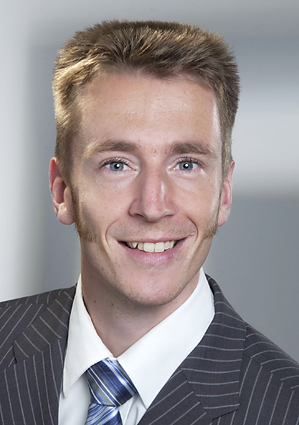
Dr. Sebastian Pfadler has 24 years of academic and industrial experience in Combustion R&D, thereof 17 years Siemens in-house. He studied chemical engineering at the Friedrich-Alexander-University of Erlangen-Nürnberg. After completing his Ph.D. thesis on laser-based measurement technology development for the structural analysis of turbulent premix flames at the Chair of Technical Thermodynamics in Erlangen, he joined Siemens in 2009, when he was initially involved in the area of high-pressure test rig validation for the platform combustion system of the X-8000H gas turbine.
Besides carrying out various development activities in multiple roles including aero designer, testing engineer and IPT lead for miscellaneous large gas turbine (‘LGT’) technology and product development projects, Sebastian Pfadler also led the development of new combustion and turbine test rigs. Since 2022, he owns the function of being the Cluster lead for LGT Combustion Technology Development. Starting June 2026, he is leading the department “Tools and methods” within the Siemens-Energy LGT Combustion module.
Full Professor of Aero-Thermo-Mechanics
École Polytechnique de Bruxelles
Université Libre de Bruxelles (ULB)
Co-chair
Brussels Institute for Thermal-Fluid Systems
and Clean Energy (BRITE)
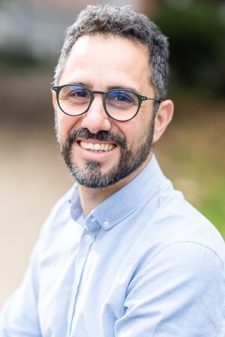
Professor Alessandro Parente is a Full Professor in the Aero-Thermo-Mechanics department at École Polytechnique de Bruxelles, Université Libre de Bruxelles. He has been the Co-chair of the Brussels Institute for Thermal-Fluid Systems and Clean Energy (BRITE) since 2021. He earned his Master’s (2005) and PhD (2009) in Chemical Engineering from the Università di Pisa. He was a Research Associate at the University of Utah (2007–2009) and joined the von Karman Institute for Fluid Dynamics between 2009 and 2010. Professor Parente is a fellow of the Combustion Institute and currently serves as the Chair of its Belgium Section. His research spans experimental and numerical studies of reacting and non-reacting flows, with applications in air quality and industrial decarbonization. He has received two ERC grants and currently leads efforts in using machine learning to enhance fluid flow simulations and develop digital twins, coordinating a European-wide network (cypher.ulb.be) for decarbonizing hard-to-abate sectors.
Hydrogen Combustion Program Manager
Ansaldo Energia Switzerland AG
Baden, Switzerland
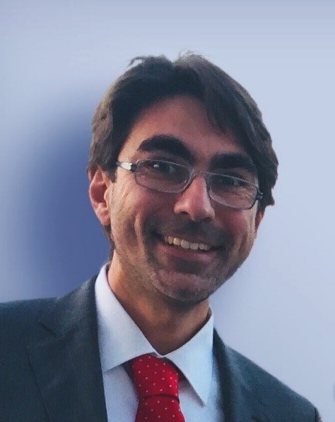
Andrea Ciani is Hydrogen Combustion Program Manager at Ansaldo Energia, based in Baden, Switzerland. He holds a PhD in mechanical engineering from ETH Zurich, specializing in combustion diagnostics developed in collaboration with the Paul Scherrer Institute. His work focuses on the development of low-emission combustion technologies for gas turbines, with particular emphasis on hydrogen and alternative fuels for decarbonized power generation.
He has extensive experience in industrial R&D and engineering leadership, previously serving in technical and managerial roles at Alstom Power. His contributions include the development of advanced combustion systems, resulting in numerous patents and scientific publications. Andrea Ciani is actively involved in international research initiatives, including EU- and Swiss-funded projects such as FLEX4H2, and contributes to strengthening collaboration between academia and industry in the field of sustainable energy systems.

Professor of Mechanical Engineering and Photon Science
Stanford University
Principal Investigator
Stanford PULSE Institute
Prof. Matthias Ihme is Professor of Mechanical Engineering and Photon Science at Stanford University and a Principal Investigator at the Stanford PULSE Institute. His research spans combustion science, fluid mechanics, and computational modeling, with a focus on turbulent reacting flows, multiphase systems, aeroacoustics, ignition phenomena, and advanced energy conversion. Internationally recognized for pioneering high-fidelity simulations of combustion and reactive flows, he integrates first-principles physics with modern data-driven and machine learning approaches to improve predictive modeling of complex reacting systems. His work has advanced the understanding and design of gas turbines, aerospace propulsion, sustainable energy technologies, and wildfire dynamics. Prof. Ihme has authored numerous influential publications in leading journals and is widely recognized for translating fundamental advances in combustion science into impactful engineering applications.